 is here! Shop now, pay later in 4 easy installments

🌿 From Vaoala to Alaoa: A Vanilla Journey Rooted in Resilience
🌱 Opening Scene: Where Vanilla Thrived
The vines at Vaoala were a living testament to resilience and care—five years old (in this particular structure), lush, vibrant, and undeniably thriving. Since building the structure in 2020, these vanilla plants had flourished with the help of homemade organic fertilizer, their health and vitality speaking volumes. The air at harvest time was sweet with possibility.

Lush vanilla vines at Vaoala
In 2023, I added something new to the mix—a honeybee hive at the edge of the site. While bees don’t pollinate vanilla, their presence sparked an unexpected miracle. For the first time in my 18 years of growing vanilla, I witnessed an extraordinary bloom—thousands of flower buds emerged, as if the vines themselves were responding to the energy of the bees. Perhaps it wasn’t pollination… but companionship.
Honeybees are beneficial for increased yield
Before dismantling the site, I documented one of our proudest milestones:
📊 2,340 flower bud clusters, each with an average of 15–25 flowers.
Using a conservative estimate of 8 beans per cluster, we were on track for 18,720 green vanilla beans in 2025—our largest harvest yet.
To give that context:
- 🌿 2019: 2,242 beans (our previous record)
-
🌿 2024: 895 beans
The growth was not only staggering—it was symbolic.
Leaving Vaoala wasn’t just walking away from a farm—it was saying goodbye to the heart of where my vanilla journey flourished. There was a bittersweet weight in counting the flower buds, knowing the vines were giving more than they ever had—just as we were about to uproot them.
In those quiet moments, walking between the rows one last time, I felt deeply humbled. The land had held our dreams, our harvests, and now, our farewell.
But hope moves with us.
We had sold our residential property, and relocation was no longer optional—it was essential. The move came during the pollination period, a risky time. I anticipated losing nearly a third of the upcoming harvest. Yet despite the financial and logistical uncertainty, Alaoa held promise. The decision wasn’t easy—but every vine we carried was a commitment to continue growing, thriving, and dreaming.

🛠️ The Dismantling Process: A Labor of Love
Relocating vanilla is no small feat—especially when each vine has spent five years growing, looping, and intertwining like a living tapestry. Many of the plants had stretched five to ten metres long, wrapped around each other with the quiet strength of age. Untangling them required time, tenderness, and a deep respect for the stress we were placing on something so delicately alive.
With my husband leading the charge—a builder with the kind of practical skill and care this task demanded—and the support of his crew and our family, we began what would become a seven-day effort. First came the coconut husks, peeled back layer by layer. These had been more than mulch—they were habitat. The vine roots had grown deep into them, and we worked slowly to avoid damaging their lifelines.
Then came the vines themselves. We unlooped and pruned them with patience, removing each from its pole with hands that knew the weight of what was at stake. Every vine deserved a gentle journey to its new home.

Coconut husks and vanilla vines removed
After that, it was time for the frame—the hundreds of galvanized steel posts that had anchored the structure, the shade cloth overhead that had protected the vines from the Samoan sun. Piece by piece, it all came down.
Yet even in the dismantling, there was order. Each element—coconut husks, vines, poles, shade cloth—was carefully stacked and readied for transport. Hubby’s work truck became our lifeline between past and future, carrying each pile down the winding path to Alaoa.
I have the images that tell this story better than words can—every dusty boot, every vine held with care. It was more than logistics. It was devotion.

Dismantling steel posts

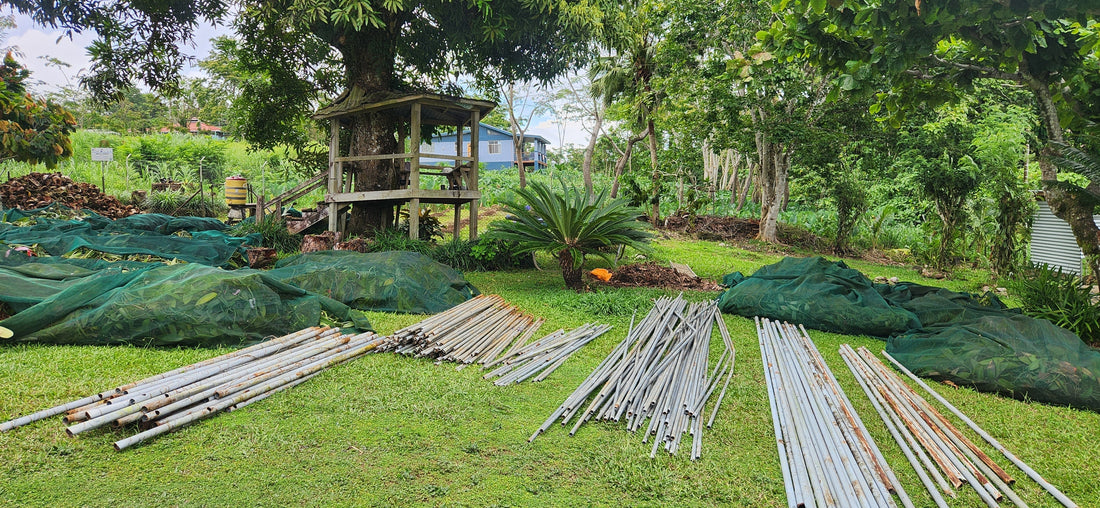
Posts, vines and shade cloth ready for relocation

Loading materials onto a truck
⛰️ Challenges on Arrival: A Waiting Game Rooted in Determination
Starting over is never easy—especially when you’re a one-woman operation with limited resources, carrying the weight of a growing business on your shoulders. Every sale of vanilla goes straight back into sustaining the dream. There’s no surplus, no safety net—only slow but steady growth, driven by patience and a fierce love for the crop.
Relocating the entire farm structure was a massive undertaking. With no immediate funds to rebuild and only a handful of helping hands, the next step was navigating Samoa’s reality for many small agri-businesses: donor dependency. I found myself writing proposal after proposal, seeking support to procure materials and equipment, all while knowing we were at the mercy of someone else’s timeline. Responses don’t come quickly—it’s a waiting game filled with hope and uncertainty.


Vines and posts lying on ground at Alaoa
Since May this year, I’ve been waiting for the materials promised through the District Council’s support. That approval felt like a light breaking through, yet still, the vines lie dormant at Alaoa, resting on the ground. Each day they wait, I know I’m losing more. And I accept the likelihood that I may have to begin again—from cuttings to the slow three- to four-year climb toward flowering.
Yet I don’t shy away from it.
Because when you love something deeply—when it’s more than a product, more than a business—you rebuild. You recommit. And you show your community that small businesses can thrive, even when the odds demand everything from you. This is what passion looks like. This is what resilience grows.
🌍 Why It Matters: A Recommitment to Purpose
Relocating Vaoala Vanilla wasn’t simply about moving vines from one place to another—it was about reaffirming everything this journey stands for. Every challenge, every setback, and every moment of rebuilding reflects a deeper commitment to sustainable agriculture, ethical business, and the belief that Pacific-grown vanilla deserves a place on the world stage.

The new farm site in Alaoa offers long-term benefits that go beyond just space. It's a chance to establish a more resilient, sustainable growing environment—one that better aligns with our evolving goals. We're embracing techniques that nurture soil health, reduce input costs, and build climate resilience. And with each vine we replant, we’re investing in biodiversity, community education, and regional self-sufficiency.
This chapter marks a turning point—not just in logistics, but in spirit. It’s a reminder that success isn't linear, and growth often begins underground. The decision to start again, despite the loss and long wait, is rooted in passion—for vanilla, for Samoa, and for a business model that puts purpose before profit.
At the heart of this vision is community.
As my business grows slowly, so too does the opportunity to uplift others. Through farm tours, vanilla growing workshops, and business education, I want to share what I’ve learned—to help others dream bigger and plan better. My goal is to empower the next generation of growers and entrepreneurs, using my experience to build pathways to economic independence for our local community.
Vaoala Vanilla isn’t just surviving the relocation. It’s transforming through it—and bringing others along for the journey.
Stay tuned for the next chapter of this story when we begin to rebuild at Alaoa.
